Making Sense of Collections and Charge-Offs
A collection account or a charge-off can narrow your financial choices. Learn what these entries mean and what your options may be. Find Out What's On Your File
A collection account or charge-off usually shows up after a debt falls seriously past due, or after it gets passed to a third party to collect. Those entries can raise questions when you apply for a car loan, a mortgage, an apartment, or other credit. They can also be genuinely stressful when you do not recognize the account, disagree with the amount shown, or believe the reported status is wrong.
San Antonio Credit Repair helps you make sense of the collection accounts and charge-offs showing up on your credit reports. We go over the account details, explain how these entries get reported, and talk through whether the information looks inaccurate. We do not promise a collection entry will come off or a creditor will change its reporting. Accurate information generally cannot be removed just because it is unfavorable.
In the San Antonio area, collection accounts and charge-offs often trace back to a specific life event — a medical bill from a hospital stay, a broken lease during a military move, a card that slipped away from you during a job change. Before you answer any collector, it helps to know exactly what is being claimed: the original creditor, the amount, the dates, and whether the account is really yours. We walk through each entry with you first.
These are actual results from past clients, previously shared on Instagram. Every credit file is different, so treat these as examples of what the process can look like, not as a promise of what yours will do.
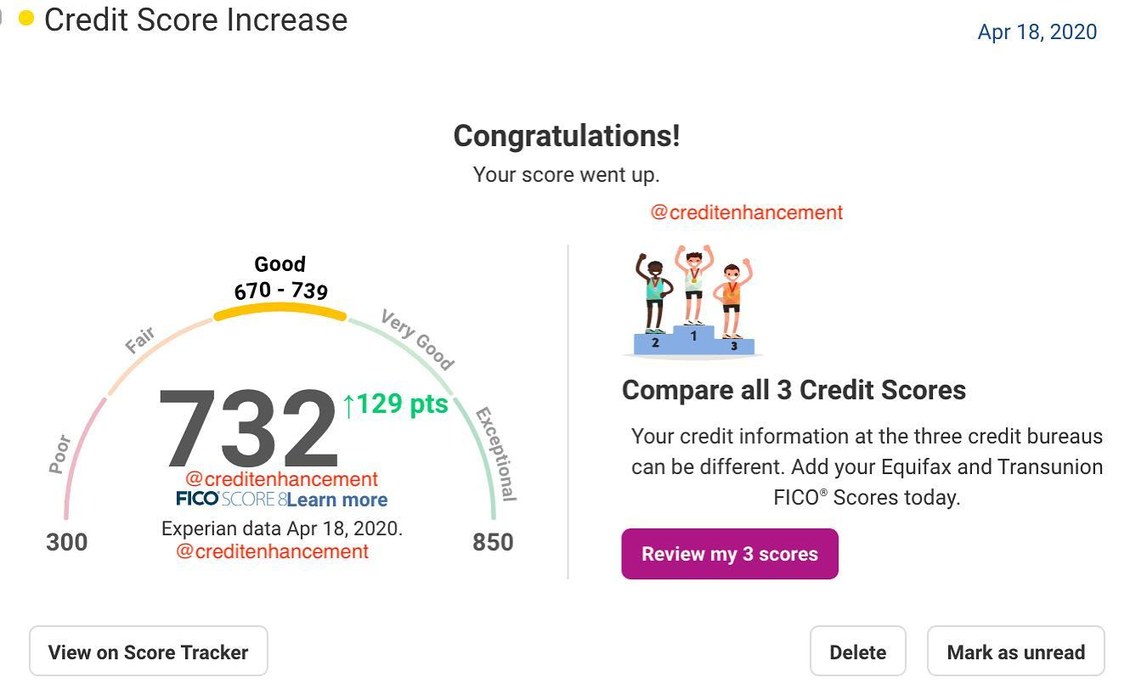
A client's Experian FICO score rose 129 points to 732 in April 2020.

Client approved for a USAA Rewards American Express card with a credit limit of 15,000 dollars, June 2019.

A client walked into a dealership with nothing down and drove out in a brand-new Lexus in July 2020.
Results vary from person to person and depend on what is in each credit file. Nothing here promises a particular score increase or deletion.
A collection account you do not recognize — or a balance that does not match your records — is hard to question until you can see exactly what the bureaus are reporting. One dollar brings up your file from all three bureaus before you decide what to do about them.
Seeing the entry in writing is the difference between guessing and dealing with the facts.
Seven days cost $1 with MyScoreIQ and the price from then on is $34.99 a month. Cancel anytime.
Collection accounts and charged-off debts do not all look the same on a credit report. We help you see the differences between them and spot possible accuracy concerns.
We go over the reported creditor, account ownership details, balance, and account status shown for collection accounts.
We explain what a charge-off means in credit reporting, and how it differs from an active collection account.
We help you look at reported balances, payment history, and the dates tied to collection or charge-off entries.
We talk through whether an entry holds inaccurate information that may be worth disputing with the right reporting agency or information provider.
We help you understand sensible ways to communicate with creditors, look over payment arrangements, and keep accurate records.
Collection accounts can involve different creditors, balances, and reporting histories. We help you get the details straight first.
We look for inaccurate information instead of suggesting that every collection entry can come off.
We explain the collection terminology you will run into and help you get ready for conversations with creditors or collectors.
We talk through the collection or charge-off entries showing up on your credit reports.
We help you go over account ownership, balances, dates, and reporting status information.
We help you find information that looks inaccurate, incomplete, or inconsistent with your records.
We lay out possible dispute options, ways to communicate, and practical credit habits.
If a collection entry is inaccurate, it may be challenged with the right reporting agency or information provider. Accurate collection information generally cannot be removed just because it is unfavorable.
Paying a collection account may change how it is reported, but it does not automatically take the entry off your credit report. The reporting rules decide how long accurate information stays.
Before you contact a collector, it helps to understand the account details and your rights. We can go over common collection terminology and what to keep in mind when you communicate.
If a charge-off holds inaccurate information, it may be challenged through a factual dispute. Accurate charge-off information generally cannot be removed just because it is unfavorable.
A collection account does not have to define your financial future. Let's go over your options together. Call (830) 202-2048.